
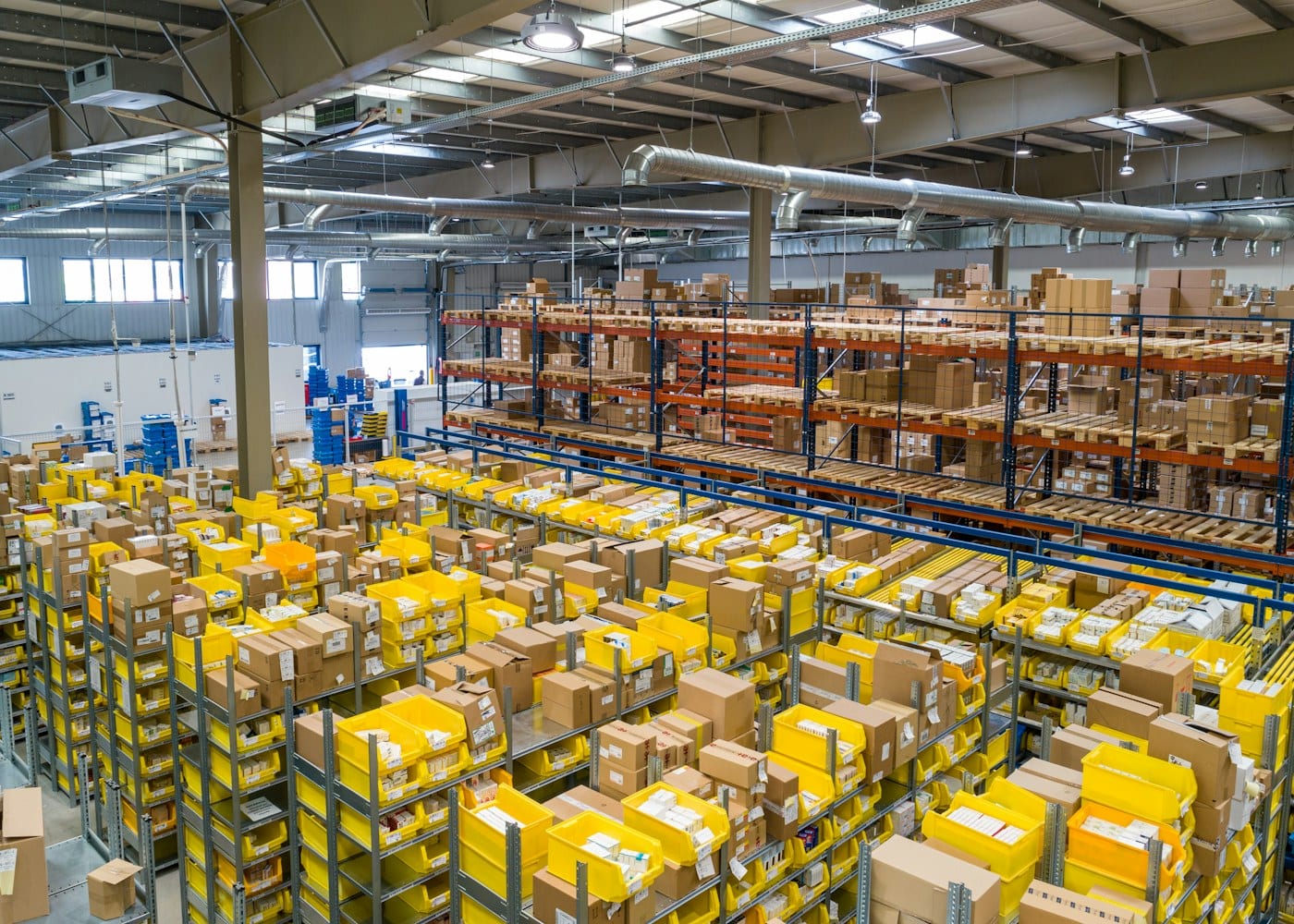
Custom software development helps Saudi logistics companies when off-the-shelf tools do not match how they take orders, plan trips, deliver and invoice. A typical custom system replaces spreadsheets and WhatsApp groups with one transport management system (TMS), an Arabic driver app with proof of delivery, ZATCA-compliant invoices generated from completed deliveries, and API links to carriers and the ERP. This article explains what to build, in what order, and what to watch out for.
Why do Saudi logistics companies outgrow spreadsheets and WhatsApp?
Spreadsheets and WhatsApp are fast to start with and free. They stop working when volume grows. Orders arrive by email, phone, WhatsApp and a customer portal, and someone types them into a sheet. Planners assign trips from memory. Drivers send photos of signed delivery notes into a group chat. Finance waits for the paper to come back before it can invoice.
- Orders get lost or entered twice
- Nobody can see which deliveries are late until the customer calls
- Proof of delivery is a blurry photo in a chat with hundreds of messages
- Cash on delivery collections do not match what drivers hand in
- Invoices go out days or weeks after the delivery, which slows cash flow
- Knowledge sits in a few people's heads, so holidays and resignations hurt
None of this needs a large ERP project to fix. It needs a system shaped around your process. We describe how we approach projects for the Kingdom on our page about software development for Saudi companies.
What does a transport management system include?
A TMS is the centre of a logistics operation. It holds orders, customers, vehicles, drivers and rates, and turns orders into trips. For a Saudi operator, the core usually includes:
- Order intake from a customer portal, email import, API or a simple form for the call centre
- Customer rate cards: per trip, per pallet, per kilogram, per drop, with surcharges
- Load and route planning, with multi-drop trips and time windows
- Trip assignment to your own drivers or to subcontractors
- Live trip status from the driver app and GPS trackers
- Exceptions: failed deliveries, damages, returns and waiting time
- Subcontractor statements and payments
Every operator is different. A distributor with its own vans needs van stock and route sales. A third-party carrier needs rate cards per contract. A retailer running same-day delivery in Riyadh needs slot booking and customer tracking links. That is why many logistics companies choose custom logistics software in Saudi Arabia rather than forcing their process into a generic product.
How should last-mile delivery work in Saudi cities?
Last-mile delivery is where customers judge you. The driver app is the most important screen in the system, so design it for the people who use it. Drivers in Saudi fleets often speak Arabic, English, Urdu or Hindi, so offer each, with Arabic in proper right-to-left layout.
- Addresses captured with the Saudi National Address or a shared map pin, since many customers send a location rather than a street name
- Electronic proof of delivery: signature, photos, GPS position and time stamp
- Offline mode, so stops can be completed without signal and synced later
- Cash on delivery recorded per stop, with an end-of-day settlement sheet per driver
- Customer notifications by SMS or WhatsApp with a live tracking link
- Delivery windows and shifts that follow Ramadan hours and Friday schedules
How do deliveries turn into ZATCA-compliant invoices?
In Saudi Arabia, VAT-registered businesses must issue electronic invoices under ZATCA's e-invoicing rules (FATOORA). Phase 2, the integration phase, is being rolled out to taxpayers in waves, and once your company is called it must connect its invoicing system to ZATCA. Standard tax invoices to businesses are cleared by ZATCA before they are shared with the customer, and simplified invoices to consumers are reported within 24 hours. Each invoice carries a QR code and a cryptographic stamp.
For a logistics company, the useful part is linking invoices to delivery data. When a trip is closed with proof of delivery, the system can calculate the charge from the customer's rate card, add waiting time or extra drops, and produce the e-invoice the same day. Credit notes for damages or failed deliveries follow the same rules. Check with your tax adviser which wave applies to you, and design the invoicing module so it can meet the integration requirements before your deadline.
The fastest way to improve cash flow in a logistics business is to invoice on the day of delivery, from the delivery record itself.
Which integrations matter most?
A logistics system rarely stands alone. These are the integrations we see most often:
- Carriers such as SMSA, Aramex and Naqel, where you hold an account and they offer an API: create shipments, print labels and pull tracking status into one view
- Your ERP or accounting system for customers, invoices and payments
- GPS trackers or a fleet management platform for live positions, mileage and driver hours
- Payment links and card terminals for cash on delivery alternatives, including mada
- Customer systems that send orders by API or file, such as e-commerce stores and retailers' portals
If you also need vehicle tracking, fuel and maintenance control, our GPS tracking and fleet management system shares data with the custom TMS, so you do not pay to build tracking from scratch.
Should you build or buy logistics software?
Buy when a packaged product fits your process with little change and you accept its limits. Build when your rate structures, customer contracts or warehouse flows are what set you apart, or when you need tight ERP integration. Many companies do both: a ready-made product for tracking or warehousing, with custom software around it for order intake, rating and invoicing. Our custom software development services are set up for exactly this kind of mixed project.
How should the project be phased?
- Discovery: map how orders, trips, deliveries and invoices move today, and pick the process that costs the most.
- Phase 1: order intake, trip assignment and the driver app with proof of delivery.
- Phase 2: rate cards and invoicing from delivery data, built to ZATCA e-invoicing rules.
- Phase 3: carrier integrations, customer portal and tracking links.
- Phase 4: warehouse functions, if you hold stock: receiving, bin locations, barcode picking and cycle counts.
Each phase should go live and be used before the next starts. Run the new system in parallel with the old one for a short period, and train dispatchers and drivers in their own language.
What to ask any software partner
- Who owns the code, the cloud accounts and the data?
- Can the system be hosted inside the Kingdom if PDPL or a customer contract requires it?
- How is the driver app tested on low-end Android phones and weak signal?
- How will e-invoicing be tested against ZATCA's requirements before go-live?
- What support is available on the first days after launch?
Next step
Tell us how orders reach you today, how many drivers you run and which systems you already use. We will suggest a first phase and a written estimate. Talk to us about your logistics software.
Working on something similar?
See our Custom Software Development Company for GCC & US Businesses page, or talk it through with us, with no obligation.